

Solutions
Built for the brands that feed the world.
Recipes live in one place, products live in another, and the version in Portuguese is six months behind the version in Spanish. What changes between these three is what the recipe is for, not what is broken.

Appliance and cookware
The recipe is the manual nobody throws away.
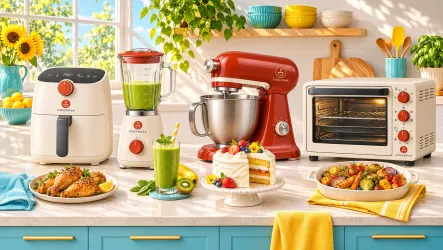
You sell a machine that does something nobody has done before, and the box has four pages explaining it. The recipes are what actually teach someone to use it, and they are scattered across seven country sites in three languages, each one a different age.
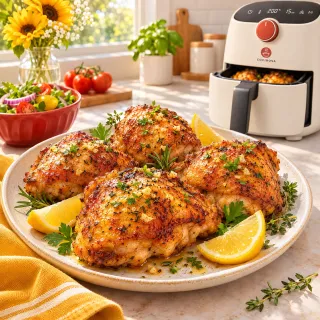
Nobody buys an air fryer for the air fryer. They buy it for what it lets them cook. Your recipes are what sell the product.
A recipe that knows which model it is for
Every recipe links to the exact product in the exact market, so a reader in Mexico is sent to the model you sell in Mexico, not the one you sell in Peru.
QR codes on the box and in the manual
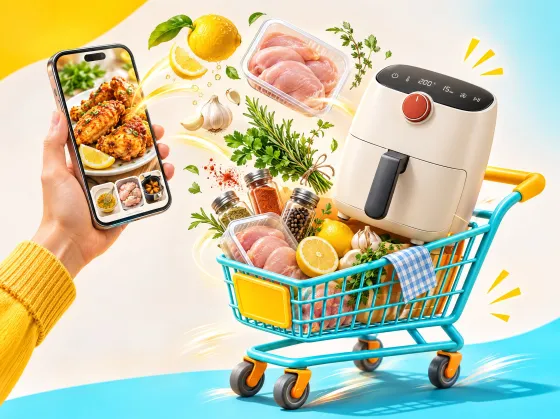
Put a code on the packaging, the quick-start card or the appliance itself. It opens the recipes for that model, in that country's language, and you can read the scans back by code, product and campaign.
One library, every market
Write a recipe once, translate it, and publish it on each market's own domain. One of our brands runs seven country markets from a single workspace.
Food and grocery
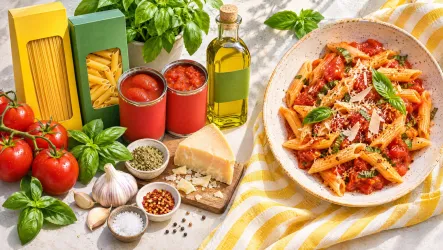
Every recipe is a shopping list with your products in it.
Your products are ingredients. The recipe is where somebody decides to buy them, and it is also the thing that turns up in a search, in a share, and increasingly in an answer from an assistant that never shows your site at all.
Your products already sit in millions of pantries. A great recipe is what gets them out of the pantry and onto the table.
Ingredients that are products
Link each ingredient to the product you sell in that market, with the place to buy it. The recipe stops being content and starts being a route to the shelf.
Built for the assistant, not just the search engine
Every recipe page carries structured data a machine can read, so when somebody asks an assistant what to cook, your recipe is readable material rather than a page it cannot parse.
Seasonal work that does not need a developer
Change a whole page from one screen, preview it privately, then publish to one market or all of them.
Agencies
Run every client's recipe content without running seven CMSs.
You have brands on Webflow, brands on Squarespace, brands on something a developer built in 2016, and a content calendar that has to land in all of them in three languages. The work is not the writing. The work is the plumbing.
Agencies should spend their time on ideas, not copying the same recipe into ten websites. RecipeRM gives your team one place to run every brand and every market.
Each brand kept separate
Every brand has its own account, catalogue, permissions and invoice. Every query is scoped to that brand, and the separation has its own tests.
Your people, your roles
Give each person the markets and the permissions they should have, set on the server and checked on every request. Remove someone and the platform stops answering them straight away.
Publish where the client already is
Recipes go out on the client's own domains, entirely in the client's brand, with nothing of ours on the page.
Not sure which one you are?
Most of our conversations start with somebody describing a mess. Describe yours.